
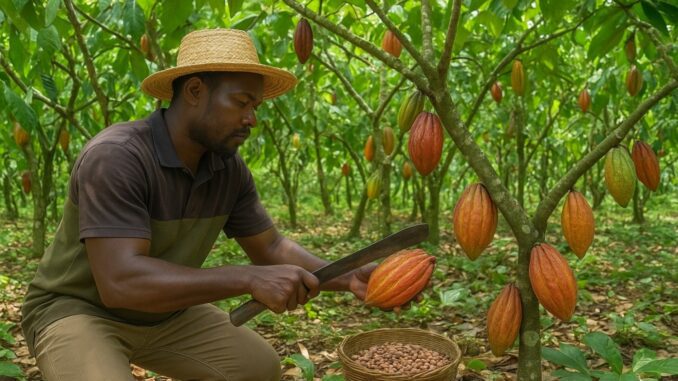
Introduction: Why Cocoa Farming in Nigeria is a Game-Changer
Cocoa farming in Nigeria is more than just planting a crop—it is an opportunity to build wealth, support communities, and strengthen the nation’s economy. Nigeria was once a top global cocoa producer, and with rising global chocolate consumption and high commodity prices, the sector is experiencing renewed interest.
Today, millions of smallholder farmers and commercial investors are turning to cocoa as a viable and profitable agricultural venture. This guide provides deep insights into how to grow cocoa, manage pests, increase yields, access local and international markets, and maximize profits sustainably.
1. The Importance of Cocoa Farming in Nigeria
1.1 Cocoa: Nigeria’s Economic Power Crop
Cocoa is a major contributor to Nigeria’s agricultural exports. It provides foreign exchange, supports employment in rural areas, and underpins various agro-industries. By diversifying the economy away from oil, cocoa farming is helping Nigeria stabilize income streams, generate wealth, and promote economic resilience.
1.2 Livelihoods and Community Impact
Millions of smallholder farmers in states like Ondo, Oyo, Osun, and Cross River rely on cocoa as their primary source of income. Each cocoa farm supports not only a household but an entire local economy, including transporters, processors, and traders. Seasonal harvesting provides temporary employment, while long-term cultivation supports community stability.
1.3 Sustainable Cocoa for Nigeria’s Future
Beyond economics, cocoa farming has environmental potential. Properly managed farms can contribute to climate resilience by promoting agroforestry, soil conservation, and biodiversity protection. Sustainable cocoa is increasingly demanded by global buyers, making eco-friendly farming practices both profitable and necessary.
2. Best Regions and Growing Conditions for Cocoa
2.1 Cocoa-Producing States
Cocoa cultivation is concentrated in the southwestern and southeastern regions of Nigeria:
- Southwest: Ondo, Oyo, Osun, Ekiti, Ogun
- Southeast: Cross River, Akwa Ibom
Smallholder farmers dominate the sector, managing farms between 1 and 5 hectares, though commercial plantations are slowly increasing.
2.2 Climate and Soil Requirements
- Rainfall: Ideal is 1,200–2,500 mm annually
- Temperature: Between 21°C and 32°C
- Soil: Well-drained, loamy, rich in organic matter
- Shade: Young trees require shade to avoid heat stress and wind damage
2.3 Challenges to Optimal Growth
- Climate variability: Unpredictable rains and drought reduce flowering and yield
- Deforestation: Expansion into forest reserves threatens sustainability
- Soil degradation: Aging farms often have nutrient-poor soils, requiring intensive fertilization
3. Cocoa Varieties and Selection for Maximum Yield
3.1 Popular Cocoa Types in Nigeria
- Forastero: High-yield, robust, disease-resistant
- Trinitario: Hybrid with improved flavor and moderate yield
- Criollo: Rare fine-flavor variety, delicate and disease-prone
3.2 Seedling Management and Nursery Techniques
- Use certified disease-free seedlings
- Maintain nurseries under shaded conditions
- Water regularly and prevent pests
- Grafting and chupon regeneration: Rejuvenates older trees, enhancing yield without replanting
3.3 Land Preparation and Planting
- Spacing: Typically 3 m x 3 m
- Shade trees: Gliricidia, plantain, banana
- Intercropping: Early years can include maize, cassava, or legumes to supplement income
3.4 Fertilization and Soil Management
- Start with organic compost or manure
- Apply NPK fertilizers periodically
- Conduct soil tests to identify nutrient deficiencies
- Mulch around trees to retain moisture and improve soil health
4. Protecting Cocoa Farms: Pest and Disease Management
4.1 Common Pests and Diseases
- Mirids: Sap-sucking insects damaging shoots and pods
- Mealybugs: Spread fungal infections and weaken trees
- Rodents: Consume cocoa pods
- Black pod disease: Fungal disease reducing yield
- Witches’ broom: Affects flowering and fruiting
4.2 Integrated Pest and Disease Management
- Cultural methods: Regular pruning, removal of diseased pods, proper shade management
- Biological control: Encourage natural predators and use biopesticides
- Chemical control: Use fungicides and insecticides cautiously
- Resistance breeding: Plant improved disease-resistant varieties
4.3 Farm Rehabilitation Techniques
- Coppicing and re-shooting old trees
- Grafting high-yield varieties onto aging trees
- Replanting in degraded areas with certified seedlings
5. Harvesting and Post-Harvest Management
5.1 Harvesting Techniques
- Cocoa pods mature 5–6 months after flowering
- Harvest pods carefully with pruning knives or machetes
- Frequent harvesting (every 3–4 weeks) prevents overripe pods
5.2 Fermentation
- Ferment beans for 5–7 days
- Cover with banana leaves or jute sacks
- Turn regularly to ensure uniform fermentation and flavor development
5.3 Drying and Storage
- Dry beans to 6–7% moisture to prevent mold
- Use raised racks or mats under sun
- Store in ventilated, dry conditions
- Proper grading enhances market value
5.4 Local Value Addition
- Processing cocoa into chocolate, cocoa butter, and powder can significantly increase farmer income
- Local processing reduces dependence on raw bean exports
- Creates employment and strengthens Nigeria’s position in the cocoa value chain
RELATED:
Food Inflation in Rural Nigeria Rises as Farmers Chase Urban Profits
China’s Growing Demand for Nigerian Sorghum Boosts Local Farmers’ Prospects
6. Understanding Cocoa Markets in Nigeria
6.1 Export Potential
Nigeria’s cocoa exports have surged recently due to global demand, strategic harvests, and currency changes. Export earnings now contribute significantly to the country’s foreign exchange reserves.
6.2 Market Risks
- Dependence on raw beans exposes farmers to price swings
- Compliance with international sustainability standards is essential
- Domestic production must meet growing export demand
6.3 Government and Policy Support
- National cocoa management committees ensure quality, traceability, and sustainability
- Policies provide support to smallholder farmers, including extension services and training programs
7. Overcoming Socio-Economic Challenges
7.1 Aging Farmer Population and Youth Engagement
- Many cocoa farmers are older, creating a gap in labor
- High cocoa prices are attracting young professionals back to farming
- Training and mentorship are crucial to ensure successful youth involvement
7.2 Financing Cocoa Farms
- Fertilizers, seedlings, and inputs are expensive
- Farmers often lack access to affordable credit
- Solutions: cooperative lending, blended finance, crop insurance
7.3 Infrastructure and Logistics
- Poor rural roads increase transport costs
- Lack of storage and processing facilities reduces bean quality
- Investment in logistics is key to reducing losses
7.4 Environmental Concerns
- Illegal cocoa farms in forest reserves threaten biodiversity
- Traceability and sustainability certification improve market access and environmental compliance
8. Opportunities and Strategic Growth
8.1 Sustainable and Traceable Cocoa
- Digital tools for farm-to-export traceability
- Agroforestry systems integrate shade trees, food crops, and soil management
- Sustainability certification increases access to premium markets
8.2 Local Processing and Value Addition
- Build regional cocoa processing hubs
- Support SMEs in chocolate and cocoa-based products
- Energy-efficient processing plants reduce costs and environmental impact
8.3 Farmer Capacity and Innovation
- Extension services to train farmers on modern techniques
- Chupon regeneration, grafting, and replanting improve farm productivity
- Youth-targeted programs encourage new talent in cocoa farming
8.4 Financial Innovations
- Cooperative and group-based lending improve capital access
- Blended finance and input subsidies reduce financial barriers
- Crop insurance mitigates climatic and pest-related risks
8.5 Policy and Governance
- Strengthen national cocoa management committees
- Land-use planning separates cocoa farms from protected forests
- Incentives for local processing boost downstream value
9. The Future Outlook for Cocoa Farming
9.1 Production Forecasts
- Current output: 280,000–320,000 metric tons per year
- Target by 2025: 500,000 metric tons with improved practices and farm rejuvenation
9.2 Economic Projections
- Value addition and traceable production can significantly increase export earnings
- Premium markets in Europe can be accessed through sustainable production and certification
9.3 Social and Environmental Impact
- Youth engagement introduces innovation and modern practices
- Agroforestry supports biodiversity and climate resilience
- Rural economies benefit from processing, cooperative structures, and employment
Conclusion: Cocoa Farming is Nigeria’s Golden Opportunity
Cocoa farming in Nigeria is entering a new era. By combining sustainable practices, local processing, farmer training, youth engagement, and strong policy support, the industry can deliver higher yields, increased income, and long-term growth.
Nigeria has the opportunity to transform its cocoa sector into a profitable, environmentally responsible, and globally competitive industry that benefits farmers, investors, and the nation.

Leave a Reply