
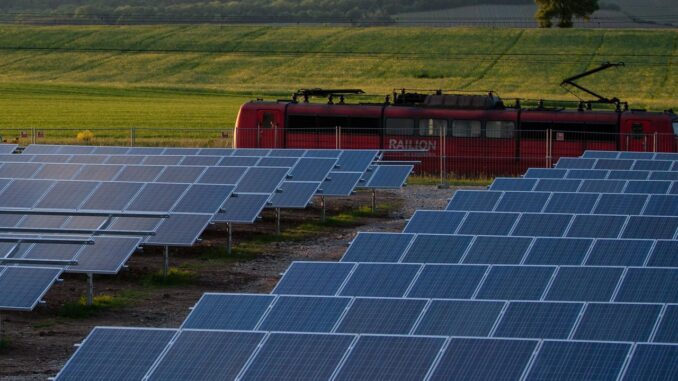
To truly understand the scale of this shift, we must look beyond narrative and into quantifiable financial modeling. Diesel is not just expensive — it is capital erosion in real time. Solar, conversely, is emerging not merely as cheaper energy, but as a balance sheet stabilizer.
Real-World Branch-Level Simulation
- Average diesel consumption per mid-tier bank branch: 1,500–2,200 litres/month
- Current diesel price range (Lagos/Abuja, Q4 2025): ₦1,450–₦1,700 per litre
- Monthly diesel spend per branch: ₦2.1M–₦3.7M
- Annual burn per 500-branch bank: as high as ₦18–₦22 billion
Now compare that with:
- Solar + lithium hybrid deployment cost (mid-size branch): ₦35M–₦45M (one-time capex)
- Post-deployment average monthly energy spend: ₦900K–₦1.4M (maintenance + battery amortization)
- Full ROI recovery period: < 24 months at current diesel inflation
This is why even the most conservative banks are bypassing board resistance — the math is now impossible to ignore.
Nigerian Banks Tapping Solar Energy to Cut Rising Diesel Costs — Infrastructure & Deployment Models
Not every bank is taking the same route. There are three dominant deployment strategies emerging:
1. Full Ownership Model
Banks like GTCO, Zenith, and First Bank are purchasing their own solar infrastructure outright, securing long-term control and higher ROI.
2. Energy-as-a-Service (EaaS) Model
Adopted by Access Bank, where third-party providers install solar on a long-term service agreement, replacing diesel procurement contracts entirely.
3. Solar Microgrid Banking Networks
This is the future-forward model — where banks co-own solar grids that power ATMs, agency networks, and third-party fintech partners.
This banking–energy convergence is expected to create a new trillion-naira sector — where banks effectively become shadow utility companies.
Nigerian Banks Tapping Solar Energy to Cut Rising Diesel Costs — ATM & Agency Network Revolution
70% of bank ATMs in semi-urban and rural Nigeria still run exclusively on diesel — one of the most inefficient cost structures in African banking.
That will not exist by 2027.
Banks are now rolling out:
- Solar-powered 24/7 ATM islands in fuel-scarce towns
- Mini “energy-independent micro-branches” with < 8 staff
- Solar-powered agency hubs competing head-on with Opay, Moniepoint, PalmPay
This is not sustainability storytelling.
It is war for last-mile dominance.
SEE ALSO:
Nigerian Tech Graveyard Expands: Why Multi-Million Dollar Startups Are Quietly Dying
How Nigerian Corporates Can Legally Escape the 30% Capital Gains Tax
Expert Insight: Why the Shift Is Now Irreversible
According to a senior energy advisor working with multiple tier-1 Nigerian banks, “What changed is not technology — it’s desperation. Diesel is now a direct threat to bank profitability. Solar is no longer innovation — it is survival infrastructure.”
A former CBN regulatory official privately confirmed that by Q2 2026, banks failing to disclose a clear energy-transition roadmap may face capital adequacy pressure, especially if energy risk is identified on their books.
This signals the future clearly: solar adoption is no longer optional — it is becoming compliance-driven finance strategy.
Nigerian Banks Tapping Solar Energy to Cut Rising Diesel Costs — Macroeconomic Impact & Naira Stability
Diesel inflation is tied to naira volatility — because Nigeria still imports refined diesel, banks are indirectly bleeding from FX instability. Every devaluation instantly inflates operational cost.
Solar, unlike diesel, is a one-time FX exposure, then fully insulated from currency turbulence.
Result: banks with solar-backed branches will have more stable long-term cost projections, making them more creditworthy to global capital markets.
If Adoption Continues vs If Banks Delay — Scenario Forecast
| Scenario | 2027 Outcome |
|---|---|
| Early solar adopters | 35–60% OPEX savings, improved ESG score, cheaper Eurobond rates |
| Late movers | Bleeding diesel costs, shrinking branch networks, fintech takeover risk |
| Non-adopters | Potential CBN risk classification by 2028, possible M&A absorption |
The 2030 Projection: Solar-Autonomous Banking Networks
By 2030, Nigerian banking will likely evolve into a solar-powered, AI-automated, branch-light ecosystem. Rather than traditional branches, expect:
- Autonomous solar-powered ATM & transaction hubs operating 24/7 in remote markets
- AI-driven branch energy optimization, predicting load, switching power sources with zero human oversight
- Shared telecom–bank energy consortiums, co-owning microgrids instead of leasing diesel plants
- Diesel-free rural banking dominance, where fintechs will no longer hold infrastructure advantage
Top analysts predict that banking infrastructure will begin to look more like telecom infrastructure — distributed, redundant, solar-hardened.
Who Wins — and Who Gets Left Behind
- Tier-1 banks adopting now → will slash OPEX, dominate rural markets, attract ESG capital
- Tier-2 banks following by 2026 → will survive, but with higher capital struggle
- Banks delaying beyond 2027 → risk becoming fintech acquisition targets or CBN-mediated mergers
A fintech CEO recently said, “Diesel is the last fortress protecting traditional banks from total fintech domination.” Solar will remove that fortress.
Final Strategic Conclusion
Nigerian banks are no longer adopting solar for sustainability.
They are adopting solar to survive, expand, and win the next economic era.
This is not an energy transition.
It is a complete financial infrastructure revolution.
Banks that understand this now are buying the future.
Banks that delay are financing their own extinction.
Final Strategic Call-to-Action for Bank CEOs, Investors & Policymakers
If you are a bank executive, institutional investor or policy strategist, the next 12–18 months will determine market leadership for the next decade.
This is not a branding decision.
It is not an ESG checkbox.
It is a survival and dominance decision.
Banks that lock in solar infrastructure now will slash OPEX, expand faster, and attract global capital.
Banks that delay will bleed diesel costs, lose investor confidence, and risk regulatory vulnerability.
If you are a decision-maker — act now. Solar is not a trend. It is the financial foundation of Banking Infrastructure 2.0.
What’s your take on Nigerian banks switching to solar energy to cut rising diesel costs? Share your thoughts in the comment section below — and don’t forget to visit BizNalytiq for more insightful business and economic analyses.

Leave a Reply