
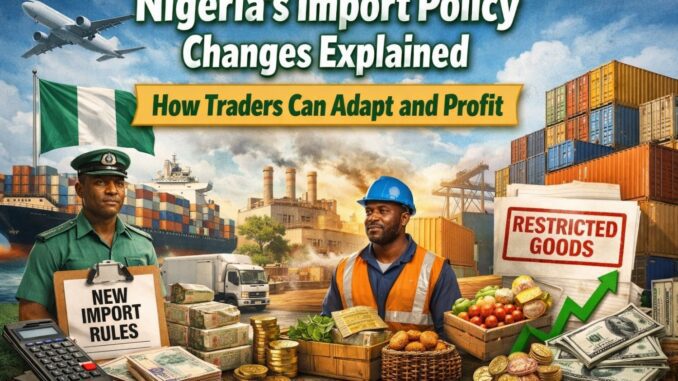
Nigeria’s trading landscape is shifting in a big way. The government’s new import policies are affecting costs, supply chains, and profitability for traders across the country. Whether you run a small e-commerce shop in Lagos, a wholesale business in Port Harcourt, or import raw materials for manufacturing, these changes matter.
This guide how new import policy affect Nigerian trading breaks down the new import policies in simple, practical terms, explains how they affect traders, and gives strategies to adapt, survive, and profit in 2026 and beyond.
1. The Background: Why Nigeria Changed Import Policies
Nigeria has always relied heavily on imports. From electronics to foodstuff, the country has imported a wide variety of goods. But this dependence comes with challenges:
- High foreign exchange demand: Nigeria spends billions of dollars yearly importing goods that can be produced locally.
- Pressure on local industries: Domestic manufacturers struggle to compete with cheaper imported goods.
- Currency volatility: Heavy importation strains the naira and creates inflationary pressures.
To tackle these challenges, the government introduced new measures targeting local content, forex usage, and duty regulations.
The goal: protect local businesses, save foreign currency, and stabilize Nigeria’s economy while still allowing trade to thrive.
Assessment of Companies Income Tax in Nigeria: What Every Business Owner Must Know
2. Key Changes in the Import Policy
2.1 $300 Duty-Free Threshold
As of September 2025, the Nigeria Customs Service (NCS) set a $300 duty-free limit for low-value imports. Traders can clear shipments under $300 without paying customs duties or VAT, as long as they stay within the four-shipment-per-year limit. (guardian.ng)
Why it matters:
- Micro and small traders can reduce import costs significantly.
- E-commerce sellers importing gadgets, accessories, and personal items benefit most.
- Encourages smaller, frequent shipments instead of one large, costly batch.
Example: A Lagos-based electronics seller now splits shipments of phone accessories under $300. By staying within the duty-free limit, customs duties dropped to zero, improving profit margins.
2.2 Forex Restrictions
The Central Bank of Nigeria (CBN) now limits access to foreign exchange for certain imports, including:
- Rice
- Cement
- Used vehicles older than 15 years
- Certain textiles and furniture
Traders must source forex privately for these items, which can increase costs and risk. (allinonenigeria.com)
Impact: Businesses relying heavily on restricted items need to plan carefully or pivot to local alternatives.
2.3 Local Content Rules
Government agencies are now prohibited from procuring foreign goods that have local equivalents, except with official approval. (independent.ng)
For traders:
- Opens opportunities for Nigerian manufacturers.
- Encourages importers to source locally where possible.
- Reduces market space for heavily imported goods that compete with local products.
2.4 Duty and VAT Waivers for Strategic Sectors
Some sectors, like pharmaceuticals and medical supplies, enjoy temporary duty and VAT waivers. (nairametrics.com)
Benefit:
- Lowers production costs.
- Encourages local manufacturing of essential goods.
- Provides traders an opportunity to expand output or reduce retail prices.
Example: A pharmaceutical company in Lagos used duty-free raw materials to cut production costs by 30%, allowing them to expand output and lower medicine prices.
3. How These Changes Affect Nigerian Traders
3.1 Increased Costs for Certain Imports
High tariffs and restricted forex make some imports more expensive. Traders who fail to adjust pricing risk losing margins.
Example: A trader importing cement from neighboring countries now pays more due to restricted forex and customs duties, forcing them to raise prices locally.
3.2 Shift Towards Local Sourcing
Many importers are now partnering with local manufacturers to source products.
Benefits:
- Reduced forex exposure.
- Faster supply chain and delivery.
- Support for “Made in Nigeria” initiatives.
Example: A Lagos-based food distributor shifted from frozen imports to local producers, cutting delays and costs while boosting local manufacturers.
How Nigeria’s New Tax Policy Will Really Affect Your Business in 2026
3.3 Compliance and Paperwork Requirements
All traders must now maintain:
- Form M for import permits
- Certificates of origin
- Proof of local content for restricted goods
Failing to comply can result in fines or seizure of goods. Many traders now hire customs clearing agents to avoid penalties.
3.4 Supply Chain Delays
Customs scrutiny and documentation checks increase clearance times. Traders must plan ahead for delivery delays, especially for seasonal or fast-moving goods like electronics, clothing, and cosmetics.
3.5 Opportunities for Smart Traders
Traders who adapt quickly can profit by:
- Importing small, duty-free consignments
- Partnering with local producers
- Using duty and VAT waivers
- Planning efficient logistics and cash flow
4. Strategies to Adapt and Profit
4.1 Diversify Suppliers
- Mix local and foreign suppliers.
- Source from ECOWAS countries for cheaper tariffs.
- Reduce reliance on a single country or supplier.
4.2 Maximize Duty-Free Shipments
- Break large shipments into multiple consignments under $300.
- Stay within the four-shipment-per-year limit.
- Reduces customs costs and protects cash flow.
4.3 Partner with Local Manufacturers
- Collaborate with local producers for assembly or distribution.
- Reduces forex exposure and import risk.
- Supports “Made in Nigeria” initiatives.
4.4 Monitor Compliance and Documentation
- Keep all Form M, invoices, and certifications updated.
- Track shipment clearance with logistics software.
- Avoid fines and delays.
How to Draft an ESG Policy for Small Businesses: A Practical Step-by-Step Guide
4.5 Adjust Pricing and Profit Margins
- Factor in duties, VAT, and forex costs.
- Adjust retail prices strategically.
- Bundle products where possible to reduce per-unit customs cost.
4.6 Join Trade Associations
- Gain policy updates and training.
- Advocate for balanced regulations.
- Network with other traders for partnerships.
5. Physical Examples of Traders Adapting
Example 1: E-Commerce Retailer in Lagos
- Before: Paid 15–20% extra on imported gadgets.
- After: Split shipments under $300.
- Result: Customs duties dropped to zero, improving profits without raising prices.
Example 2: Pharmaceutical Manufacturer
- Used duty-free raw materials to cut production costs by 30%.
- Expanded output and lowered retail prices.
- Strengthened local manufacturing capacity.
6. Frequently Ask Questions (FAQs)
Q1: Can I import items restricted from official forex?
Yes, but you must source forex privately, which may cost more.
Q2: How many duty-free shipments am I allowed per year?
Four shipments under $300 each.
Q3: Do duty waivers make local manufacturing cheaper?
Yes, particularly in sectors like pharmaceuticals. It reduces costs and increases competitiveness.
Q4: Can I still import restricted goods?
Yes, if you have a valid waiver or source forex privately, but costs are higher.
7. 2026 Trader Checklist
- Review import restrictions and tariffs
- Plan shipments under the $300 duty-free threshold
- Partner with local manufacturers
- Track Form M and other documents
- Diversify suppliers and reduce forex risk
- Adjust pricing and margins
- Join trade associations for updates
8. Conclusion
Nigeria’s new import policies are both a challenge and an opportunity. Traders who adapt by:
- Using duty-free thresholds
- Partnering with local producers
- Planning for forex and customs requirements
- Staying informed on regulations
…can protect profits, expand operations, and even gain a competitive edge.
The key is planning, compliance, and smart sourcing. Traders who act now will thrive in 2026 and beyond.

Leave a Reply