
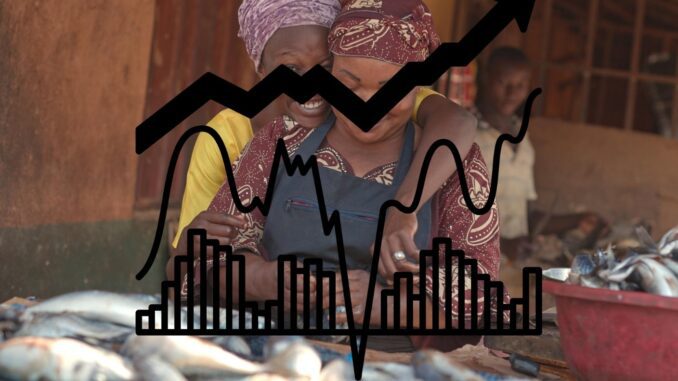
Introduction: The Paradox of Progress Without Prosperity
Nigeria’s macroeconomic data appears to suggest a nation on the mend. Inflation, though high, is beginning to level off; oil output is recovering; and reforms in exchange rate management and fiscal policy have attracted cautious optimism from international lenders. The World Bank forecasts that Nigeria’s GDP could expand by around 3% in 2025, signaling gradual stabilization after years of volatility.
Yet, these numbers conceal a harsher truth. For the average Nigerian, daily life remains defined by soaring food prices, stagnant wages, unreliable power supply, and rising transport costs. Across markets from Lagos to Kano, citizens share a similar sentiment: “They say the economy is growing, but our lives tell another story.”
This disconnect between statistical progress and lived experience lies at the center of the Nigerian economy challenges. It reflects a paradox where macroeconomic improvements fail to yield real social progress. To understand this gap, one must look beyond the numbers—to the structural flaws, policy missteps, and governance issues that continue to undermine inclusive recovery.
1. The Illusion of Growth: What GDP Doesn’t Reveal
1.1 Growth Without Inclusion
Nigeria’s GDP has oscillated between 2.5% and 3.1% in recent years, driven by sectors like oil, services, and agriculture. However, with a population growth rate above 2.6%, per-capita income remains stagnant. The National Bureau of Statistics (NBS) confirms that real incomes are falling, as inflation erodes purchasing power and job creation lags far behind population expansion.
RELATED: Impact of Rising U.S. Mortgage Rates on Nigerian Real Estate Buyers in 2025
The pattern is clear: Nigeria’s growth is not inclusive. Economic expansion benefits a narrow elite concentrated in finance, oil, and tech, while agriculture and manufacturing—sectors employing most Nigerians—remain underdeveloped. This uneven growth produces wealth at the top but little prosperity at the bottom, leaving millions excluded from progress.
1.2 Why Nigeria’s Growth Feels Hollow
Even during periods of strong GDP growth, ordinary Nigerians see little improvement because the gains are concentrated. A farmer in Benue still struggles with poor irrigation, a factory worker in Aba faces power outages, and a civil servant in Kaduna watches prices outpace salary. The economy is expanding, but not empowering.
2. Why Inflation Persists in Nigeria’s Economy
2.1 A Chronic Inflation Trap
As of mid-2025, Nigeria’s inflation rate remains one of the highest in Africa—about 27% according to the Central Bank of Nigeria (CBN). Food inflation alone surpasses 30%, hitting low-income families hardest. With food taking up over 60% of household spending, rising prices translate directly into hunger and hardship.
The causes are layered: exchange-rate volatility, supply chain disruptions, and the 2023 removal of fuel subsidies—all combining to elevate production and transport costs. Inflation is not just an economic issue; it’s a humanitarian one, eroding real income and confidence in public policy.
2.2 The Naira’s Weakness and Imported Inflation
Exchange-rate instability remains a central driver of inflation. The naira, though officially liberalized, continues to suffer from scarcity of foreign currency. The IMF’s 2025 assessment warns that continued capital flight and dependence on imported goods amplify domestic price pressures.
Every time the naira weakens, the cost of imported inputs—machinery, fertilizer, fuel—rises. Businesses pass these costs on to consumers. The resulting inflation cycle traps the poor in perpetual struggle, while undermining investor trust in policy consistency.
3. Structural Flaws: The Deep Roots of Economic Inequality
3.1 Overreliance on Oil Revenues
Oil remains Nigeria’s economic backbone and Achilles’ heel. Despite efforts to diversify, crude exports still account for roughly 80% of foreign earnings. With limited refining capacity, the country imports most of its petroleum products, spending billions of dollars annually on imports that could be produced locally.
This dependency makes the economy vulnerable to global oil shocks and drains foreign reserves that could otherwise fund infrastructure or education. As global demand for fossil fuels plateaus, this model becomes increasingly unsustainable.
3.2 Weak Industrial Base
Manufacturing contributes less than 10% of Nigeria’s GDP—a stark contrast to other emerging economies. Power outages, logistics bottlenecks, and high borrowing costs discourage production. Investors face multiple levies and poor infrastructure, pushing many to relocate factories to Ghana or Kenya.
Without a vibrant industrial base, Nigeria struggles to generate formal employment or export competitive goods. This industrial stagnation keeps millions in low-productivity jobs and fuels income inequality.
3.3 The Productivity Problem
Nigeria’s productivity per worker lags far behind global averages. Limited access to modern tools, poor credit systems, and underfunded education have stifled innovation. According to the African Development Bank, Nigerian workers produce less than half the output of peers in comparable economies.
Until productivity improves—through technology, training, and infrastructure—economic growth will remain fragile and jobless.
4. Policy Reforms: Necessary but Painful
4.1 The Fuel Subsidy Dilemma
The removal of fuel subsidies in 2023 was meant to free up public funds for development. While fiscally sound, the policy unleashed an immediate wave of hardship. Transport fares tripled, food prices soared, and inflation spread through supply chains.
The World Bank praised the reform as a “necessary correction,” but its timing—without a robust safety net—left citizens exposed. Without targeted palliatives and investments in public transport, the fiscal savings risk deepening poverty rather than alleviating it.
4.2 Monetary Tightening and Credit Squeeze
To tame inflation, the CBN raised its Monetary Policy Rate (MPR) to 27.25% by 2025—the highest in decades. Though this stabilized the exchange rate temporarily, it made credit unaffordable for small and medium enterprises (SMEs). Many entrepreneurs shuttered their businesses, unable to service loans or restock goods.
This policy trade-off highlights a recurring dilemma: stabilizing prices without stifling growth. SMEs, which account for over 80% of employment, bear the brunt of restrictive monetary policy.
5. Poverty and Public Sentiment: Stability That Hurts
5.1 Rising Poverty Amid Economic Stability
The NBS estimates that over 133 million Nigerians live in multidimensional poverty—lacking access to education, healthcare, clean water, or decent housing. While macroeconomic stability matters, it offers little comfort to families surviving on less than ₦1,000 a day.
The World Bank warns that Nigeria’s economic model risks entrenching a “two-speed economy”: one where a minority thrives in urban centers, while the majority struggles in rural and peri-urban areas. Until inclusive policies reach the grassroots, the stability narrative remains hollow.
5.2 The Japa Phenomenon and Youth Exodus
Nigeria’s youth unemployment rate exceeds 40%, driving thousands of skilled professionals to emigrate in search of better prospects—a movement popularly dubbed Japa. This exodus drains local talent, weakens innovation, and erodes confidence in the country’s future.
READ MORE: CBN Takes Direct Control of Nigeria’s Fixed-Income Market to Boost Transparency
Remittances offer some relief, but they cannot replace the loss of human capital. Long-term growth requires keeping talent at home through better jobs, governance, and living standards.
6. Governance, Corruption, and the Trust Deficit
6.1 Endemic Corruption and Policy Flip-Flops
Corruption remains a major impediment to progress. Transparency International’s 2024 index ranked Nigeria 150th out of 180 countries, reflecting pervasive graft across public institutions. This weakens investor confidence and diverts resources meant for development.
Frequent policy reversals—such as changing import bans or altering tax regimes mid-implementation—further discourage investment. Businesses crave stability; Nigeria often delivers uncertainty.
6.2 Bureaucratic Bottlenecks and the Cost of Doing Business
Starting or running a business in Nigeria remains cumbersome. Multiple taxes, inconsistent regulations, and overlapping government agencies inflate costs and delay approvals. The World Bank’s Ease of Doing Business reports consistently cite Nigeria’s regulatory complexity as a deterrent to both domestic and foreign investors.
Streamlining bureaucracy and enforcing clear policies could unlock billions in private investment, yet progress has been slow.
7. The Human Face of Economic Hardship
Behind the macro data are human stories:
-
A trader in Onitsha who adjusts prices daily as the naira slides.
-
A teacher in Kaduna whose salary barely covers transport.
-
A farmer in Taraba unable to afford fertilizer or diesel for irrigation.
These individuals illustrate how Nigerian economy challenges manifest at street level. Inflation erodes dignity, and policy uncertainty breeds despair. For many, economic “recovery” remains invisible.
8. Pathways to Inclusive Recovery
8.1 Boosting Local Production
Reducing import dependence is crucial. Expanding local refining and investing in agro-processing can create jobs and stabilize prices. The Dangote Refinery’s full operation could mark a turning point—if transparency and efficiency are maintained.
In agriculture, improved storage, irrigation, and transport systems would reduce post-harvest losses and enhance food security.
8.2 Supporting SMEs and Entrepreneurs
Simplifying access to credit, lowering taxes on startups, and digitizing regulatory procedures can revive Nigeria’s entrepreneurial spirit. The success of the Anchor Borrowers Programme shows how targeted interventions can lift productivity when properly managed.
8.3 Investing in Human Capital
Education and vocational training remain Nigeria’s best long-term investment. Expanding digital literacy and STEM programs can equip youth for the global economy. A skilled population boosts productivity, reduces migration pressure, and attracts high-value investment.
8.4 Institutional and Governance Reforms
Restoring public trust requires transparency, accountability, and consistent leadership. Strengthening anti-corruption agencies, enforcing procurement standards, and digitizing government processes can save billions and rebuild investor confidence.
9. The Global Lens: Risks and Opportunities for Investors
Foreign investors view Nigeria as both high-risk and high-reward. Its 200-million-plus population offers unmatched market potential, but currency risk, policy inconsistency, and infrastructure decay remain deterrents.
Yet, sectors such as fintech, renewable energy, and agribusiness are thriving. The “Silicon Lagoon” of Lagos continues to attract venture capital, while renewable-energy startups tap into growing demand for off-grid power solutions.
Investors adopting a “patient capital” strategy—partnering locally, understanding policy cycles, and diversifying across sectors—stand the best chance of success.
Stay Informed with Biznalytiq
Nigeria’s economy is changing fast, and informed insight makes all the difference.
At Biznalytiq, we break down complex economic and financial trends into clear, data-driven stories that help you stay ahead.
👉 Always visit Biznalytiq.com for the latest updates, expert analysis, and more related posts on Nigeria’s economy, business growth, and investment opportunities.
10. Conclusion: Turning Stability Into Shared Prosperity
Nigeria’s economy stands at a crossroads. The numbers hint at recovery, but the people feel recession. Until macroeconomic stability translates into improved living conditions, the term “growth” will ring hollow.
Addressing Nigerian economy challenges requires more than policy tweaks—it demands structural transformation, transparent governance, and inclusive planning. The goal must shift from simply growing GDP to improving the quality of Nigerian lives.
True progress will come when a teacher, a trader, and a tech worker all feel the benefits of reform. Stability alone is not enough; prosperity must be shared.

Leave a Reply